Love After Structure
A reflection on how recovery structure changes love from fear, reassurance-seeking, and emotional substitution into patience, coherence, restraint, and a grounded self.
There was a time when I believed love was supposed to feel like emotional gravity.
Overwhelming.
Consuming.
Irresistible.
I measured love by how completely someone occupied my mind. By how much their absence ached. By how urgently I needed reassurance. By how quickly silence curdled into fear.
If I longed enough, I believed the love must be real.
If I suffered enough, I believed the love must be profound.
If I could not stop thinking about someone, I mistook that preoccupation for devotion.
For a long time, I confused emotional intensity with emotional truth.
But much of what I called love was entangled with fear.
Fear of abandonment.
Fear of being forgotten.
Fear of not being enough.
Fear that if connection weakened, even briefly, I would collapse into some older emptiness inside myself.
Distance did not feel like distance. It felt like danger.
Silence did not feel like silence. It felt like rejection.
Uncertainty did not feel like uncertainty. It felt like the beginning of disappearance.
When the person I loved withdrew, even temporarily, something in me would begin to panic. I would chase, explain, plead, seek reassurance, search for validation elsewhere, or press my fear into demands. I loved deeply, but I was also using love as ballast against my own instability.
That distinction has taken me a long time to understand.
Recovery has slowly begun separating those things.
Not by making me colder.
Not by making me detached.
Not by making me love less.
If anything, I think I love more deeply now than I ever have before. But the shape of that love is changing. The structure underneath it is changing. It is becoming less frantic, less possessive, less dependent on immediate reassurance. Less ruled by fear. More defined by choice.
I did not arrive at this realization through philosophy alone.
I arrived at it through structure.
Through waking up each day and participating in recovery, whether I wanted to or not. Through meetings, exercise, journaling, therapy, writing, reflection, consistency, and restraint. Through learning, again and again, that an emotion does not have to become an action.
Somewhere inside that repetition, I began to understand something that changed the way I see human beings.
Identity is not as fixed as I once believed.
Personality is not as permanent as it feels.
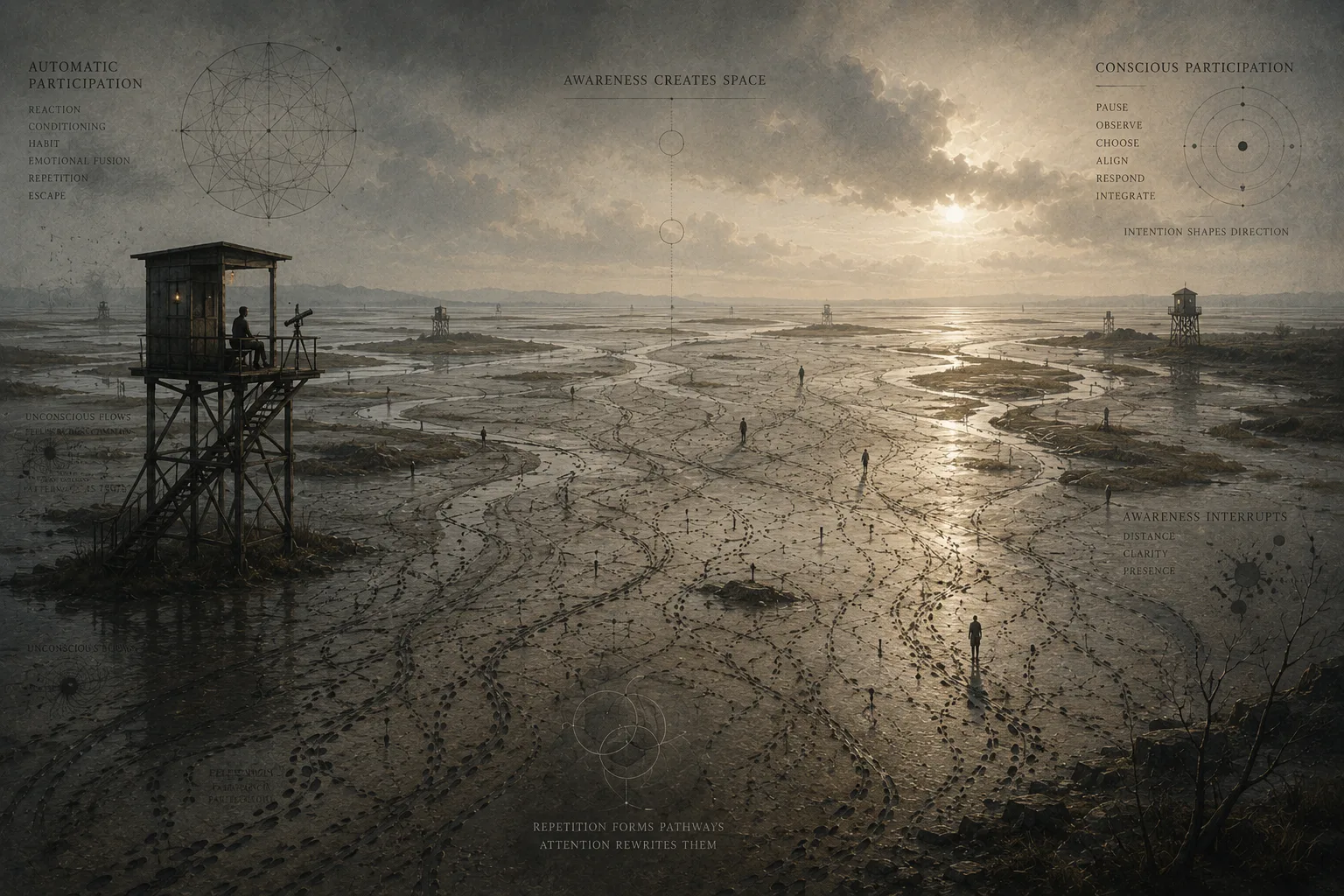
A person is shaped by repetition.
At first, recovery was simply about survival. It was about not destroying myself. About stopping substances, stabilizing my behavior, enduring discomfort, and surviving the consequences of my own life without collapsing under them.
But eventually, something deeper began to happen.
I realized that structure was not only preventing destruction.
It was creating someone.
Not an impersonation.
Not recovery as theater.
Not discipline draped over chaos.
A genuinely changing self.
A man with different reflexes. Different priorities. A different relationship to uncertainty, attachment, desire, loneliness, and pain.
That realization felt almost impossible at first.
There is a strange humility in discovering that the self is more malleable than the ego wants to admit. For years, I treated my emotional patterns as if they were facts about who I was. I was intense. I was reactive. I needed certainty. I loved desperately. I collapsed when I felt abandoned. I pursued reassurance when I felt afraid.
Recovery began to reveal that these were not eternal truths.
They were rehearsed patterns.
And what had been rehearsed could be interrupted.
What had been repeated could be replaced.
What once felt automatic could slowly become a matter of choice.
Nowhere has this become more visible than in the way I love.
In the past, emotional uncertainty would fracture me. If I felt distance from the person I loved, I would try to close the distance urgently. If I felt rejected, I would often reach for some other form of confirmation. Attention. Sex. Flirtation. Emotional substitution. Anything that could briefly convince me that I was still wanted, still powerful, still real.
I did not know how to simply feel longing.
I did not know how to let it exist without obeying it.
I did not know how to miss someone without trying to possess them.
Now something different is beginning to happen.
I can miss someone profoundly without forcing closeness. I can let uncertainty stand without turning it into a catastrophe. I can sit with longing and let it burn quietly without surrendering to impulse. I can feel desire without making desire my master.
Most importantly, I can love someone deeply while still remaining loyal to my own structure, values, growth, and direction.
That distinction is everything.
There is a woman I love very deeply.
Deeply enough that I now understand love as a choice, not only an ache. Deeply enough to see the difference between wanting someone and choosing them. Deeply enough that I can recognize attraction elsewhere without mistaking it for direction.
In the past, when I felt emotional distance, I was more vulnerable to fragmentation. I might have looked for validation elsewhere, not because my love was false, but because my identity could not tolerate uncertainty. I needed reassurance because I did not know how to remain standing.
Now, something has shifted.
I can acknowledge attraction honestly without feeling compelled to pursue it. I can recognize chemistry, sexuality, and desire without letting them reorganize my loyalties. I can notice that another person is beautiful without turning beauty into a doorway. I can feel lonely without using intimacy to escape loneliness.
That no longer feels like repression.
It feels like coherence.
The different parts of me — emotional, ethical, relational, and behavioral — are beginning to align rather than scatter.
That alignment feels beautiful.
Not because it is easy.
Because it is honest.
I no longer want to use people as remedies for abandonment. I no longer want to numb myself with attention. I no longer want to make another human being responsible for steadying the parts of me I am learning, haltingly, to hold myself.
I can feel uncertain without betraying myself.
I can feel unseen without seeking proof of my worth in the wrong places.
I can feel lonely without abandoning my own commitments.
I can love without demanding that love immediately relieve me of all fear.
And strangely, patience itself has become emotionally meaningful to me.
Not passive waiting.
Not freezing my life.
Not making another person the center of my entire existence.
My life continues moving.
I write. I work. I build. I participate in recovery. I exercise. I apply for jobs. I deepen my structure.
I become more grounded. I keep returning to the life that is asking to be built, whether or not my heart has received the certainty it wants.
This matters.
Because patience without life becomes paralysis.
But patience inside a living structure becomes something else.
It becomes devotion that does not require self-erasure.
It becomes loyalty without collapse.
It becomes love that stays present without descending into desperation.
I can choose someone without demanding immediate clarity from them. I can tolerate ambiguity without treating it as a form of humiliation. I can continue becoming myself while allowing another person to move through their own process separately from me.
That feels profoundly adult.
And painful.
Because the deeper my love becomes, the more clearly I understand that love cannot control reality.
Love cannot force timing.
Love cannot force healing.
Love cannot force sobriety.
Love cannot force readiness.
Love cannot guarantee stability, permanence, or return.
Two people can love each other and still be standing in the middle of forces larger than feeling.
Addiction. Fear. Trauma. Shame. Avoidance. Timing. Consequence. The unfinished parts of the self.
That realization hurts.
There are moments when I grieve not only the possibility of losing someone I love, but the imagined life attached to that love. A home. A family. Companionship. Waking up beside someone every morning. Growing older together. Building a life slowly, ordinarily, side by side.
Sometimes the mind sketches a future, and the heart begins mourning it before reality has spoken.
There are moments when I feel helpless because I know I cannot rescue another person into stability, no matter how deeply I care for them.
But even that grief is changing.
It is becoming clearer.
Less fused with ego.
Less governed by panic.
Less tempted to mistake love for control.
I am beginning to understand that loving someone does not obligate them to become who I hope they will become. Love cannot become pressure simply because the heart is afraid. It cannot become a pursuit simply because uncertainty hurts. It cannot become control and still call itself care.
If someone is not ready, I cannot make them ready through intensity.
If life has not opened a door, I cannot force it open through longing.
If another person has their own path to walk, I cannot walk it for them by loving harder.
And yet I still love.
That may be the strangest part.
I used to believe love required urgency to prove itself. I thought love needed to move, declare, chase, resolve, secure, and demonstrate. I thought love became more meaningful when it became more dramatic.
Now I am beginning to think real love often looks quieter.
Restraint.
Patience.
Grounded consistency.
Respect for boundaries.
Emotional regulation.
The willingness to tolerate uncertainty without turning it into harm.
The willingness to keep participating in life even when the heart is waiting for an answer.
This does not mean I no longer hurt.
There are still nights when I cry. There are still moments when silence activates fear. There are still parts of me that want certainty, reassurance, and permanence with an almost childlike urgency.
But now, even inside those feelings, something different exists.
A grounded self that remains standing.
That grounded self does not say:
If I lose this love, I lose myself.
It says:
I can love deeply and still remain whole.
Perhaps that is the real transformation recovery has given me.
Not merely sobriety.
Not merely discipline.
Not merely self-improvement.
But the discovery that love can exist without emotional self-destruction.
For the first time in my life, I am not trying to use love to escape myself.
I am learning how to love while becoming myself.