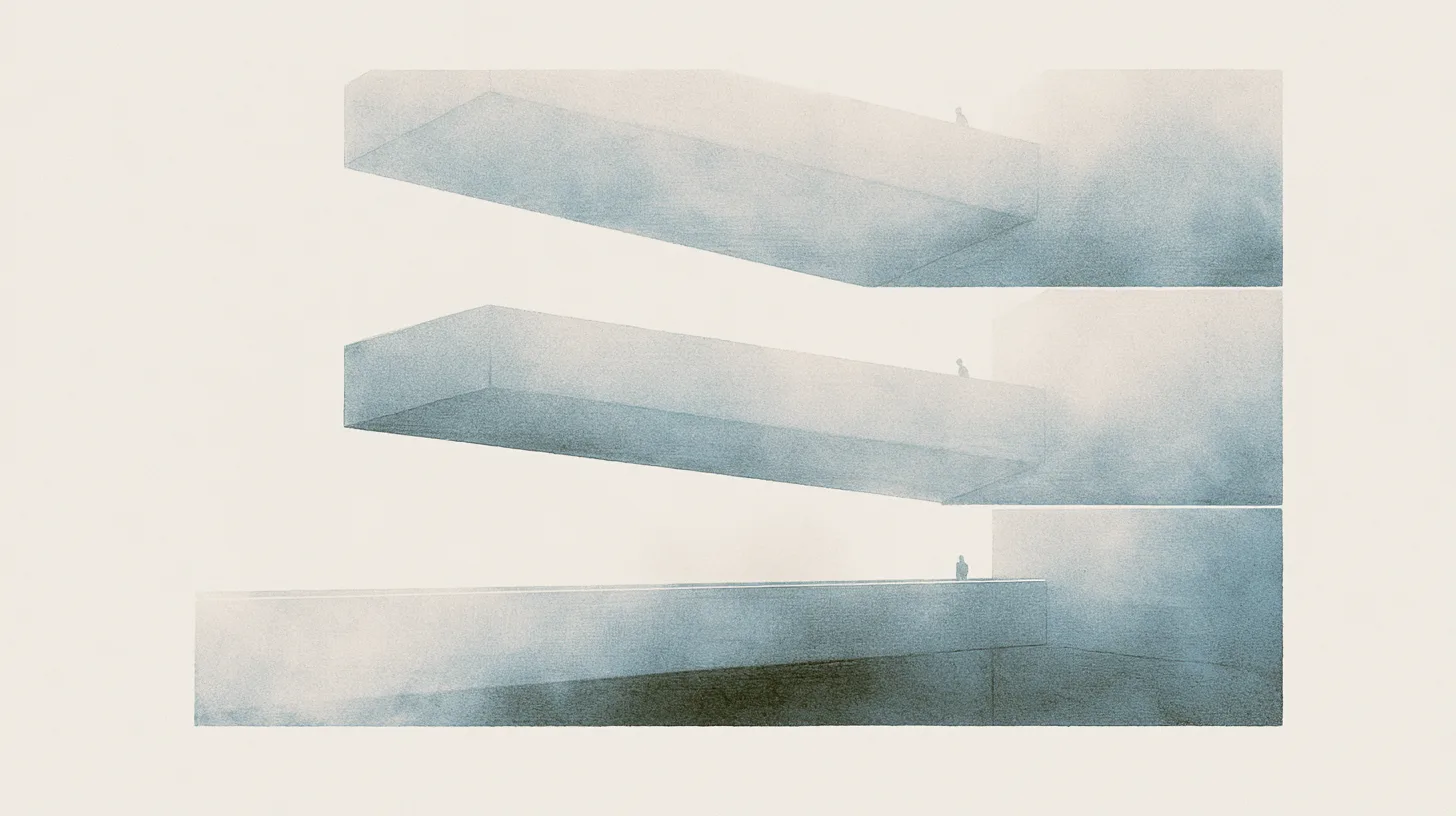
Deviation #4
Deviation names the quiet accumulation of small, rationalized departures from alignment that, when repeated and emotionally minimized, gradually normalize collapse and redirect the entire trajectory of a life.
Deviation rarely begins dramatically.
Most of the time, it begins with small compromises that initially appear insignificant or even reasonable in the moment.
A slight lowering of standards.
A rationalization.
A small exception.
A moment of selective participation.
A decision I tell myself “doesn’t really count.”
Because the change appears small, it becomes easy to dismiss it emotionally. I tell myself I’m still basically aligned, that I’m just making a minor adjustment, that I’ll tighten things back up later. That dismissal is part of the pattern.
Deviation is dangerous precisely because it accumulates quietly. It rarely announces itself as “I am now off course.” It shows up as a series of almost invisible shifts that only become obvious when I look back and see how far I’ve drifted.
In that sense, deviation is not really about one decision—it is about direction.
A single choice can matter, but what truly shapes my trajectory is repetition. Repeated small departures from alignment eventually create entirely different destinations over time. A one-degree shift, repeated consistently, can land me somewhere I never intended to go.
In the past, I sometimes focused too heavily on major mistakes—relapses, obvious betrayals of my values, visible collapses—without fully recognizing how much instability often begins through repeated minor compromises. I would treat the big event as the problem rather than the result of a long sequence of tolerated deviations.
In recovery, I’m learning that collapse rarely arrives all at once.
It usually arrives after enough small deviations have been repeated long enough to feel normal. What once would have felt like a clear violation slowly becomes “just how things are.” The nervousness or discomfort I might have felt at first gets replaced by familiarity. That normalization is part of how deviation protects itself.
This connects directly to “honesty is the key” because deviation often survives through dishonesty, rationalization, and selective awareness. I minimize, reframe, leave out details, or avoid looking too closely at what I’m actually doing. As long as I can keep the story comfortable, I can keep the deviation alive without fully admitting it to myself or others.
It also connects to “confrontation is valid,” because confrontation interrupts deviation before it has enough time to become identity, habit, or direction. When someone challenges my small compromises—or when I honestly confront myself—I have a chance to see the pattern while it is still flexible, before it hardens into “this is just who I am” or “this is just my life.”
For me, “deviation” means understanding that small departures from alignment matter precisely because they are rarely noticed immediately. The danger is not only in the size of the action, but in how quietly it shifts my trajectory and how easily I can ignore it.
I’m trying to become more aware of small compromises before they quietly become larger patterns—catching the early rationalizations, naming the exceptions honestly, and noticing when “just this once” starts to repeat.