Laying Back #4
Laying back names the gradual shift from active psychological engagement to passive occupancy, where physical presence remains but awareness, honesty, and intentional participation quietly weaken and growth stalls.
Laying back is often not obvious inactivity—it’s psychological disengagement from participation, responsibility, and growth while remaining physically present. In that sense, it creates a kind of quiet drift.
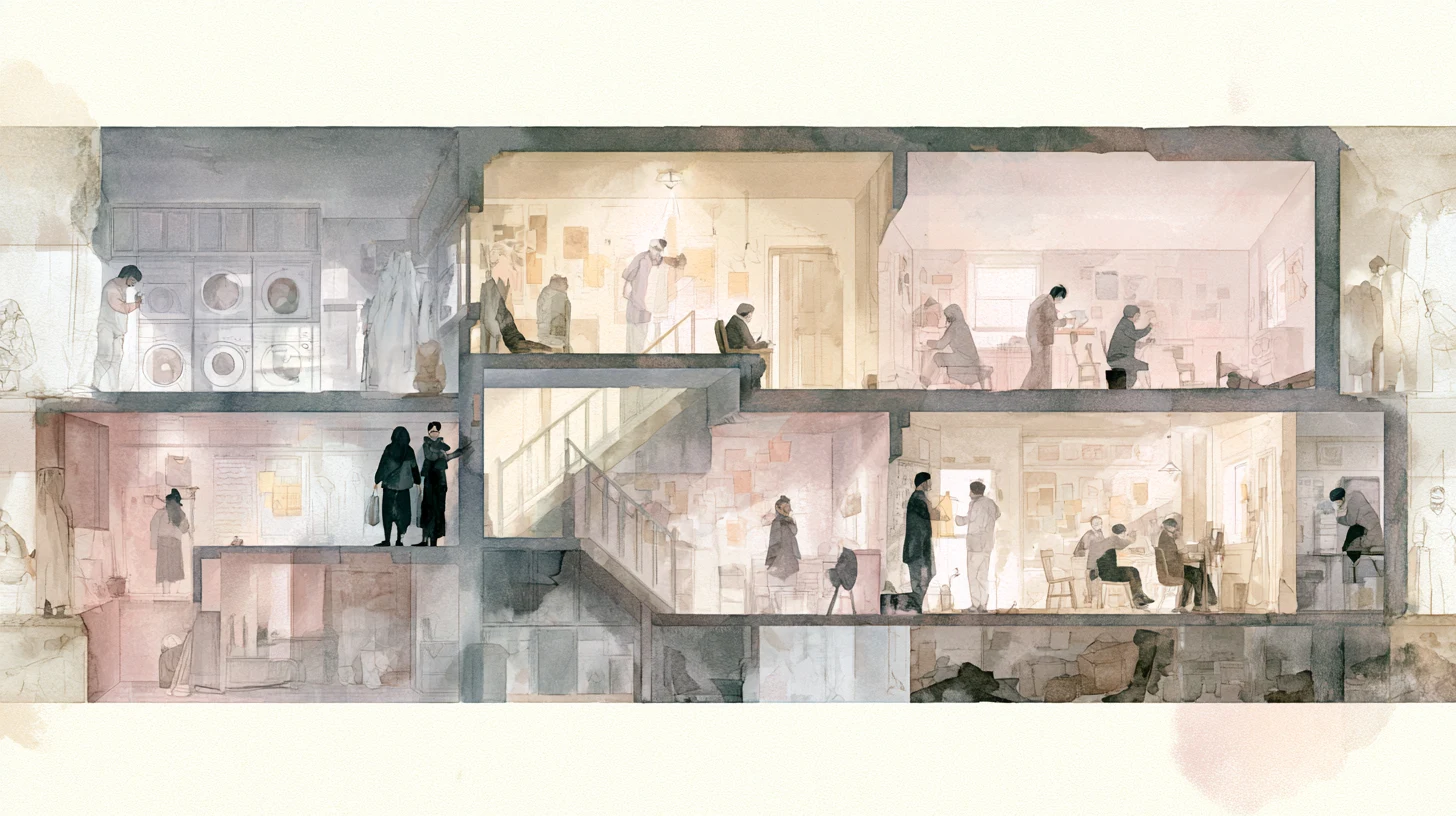
I might still attend groups, sit in the same rooms, keep the same schedule, and continue going through external motions while internally disconnecting from accountability, effort, awareness, and emotional participation. On the surface, nothing looks dramatically different. The structure is still there. But inside, I’m no longer really in contact with what I’m doing.
Because this withdrawal usually happens gradually, it can feel harmless or even emotionally comfortable at first. There’s a subtle relief in not trying as hard, in not pushing into discomfort, in letting things “just be.” It can feel like rest or a break from intensity, when in reality it’s a quiet step away from participation.
Over time, that passivity weakens alignment:
- Awareness decreases.
- Participation decreases.
- Standards are slowly lowered.
- Honesty with myself becomes softer and more negotiable.
I may still say the right things, but the internal demand for truth and effort is no longer as sharp. Small compromises become easier to justify. Missed opportunities for growth feel less urgent. The gap between what I say I’m doing and what I’m actually doing starts to widen.
In the past, I think I sometimes underestimated how much active psychological participation matters, assuming physical presence alone was enough to maintain growth. I treated “showing up” as if it automatically meant I was engaged, when in reality I could be sitting in the room and still be checked out, resentful, or just going through the motions.
In recovery, I’m learning that transformation requires conscious engagement, emotional honesty, and intentional participation rather than passive existence inside the process. It’s not just about being in the environment—it’s about how I’m actually relating to it, how I’m using it, and whether I’m willing to be affected by it. Laying back is what happens when I stop letting the process really touch me.
This connects directly to “to be aware is to be alive,” because laying back often begins when awareness weakens and unconscious repetition quietly returns. I stop noticing my patterns as clearly. I stop questioning my defaults. Old ways of thinking and reacting slide back in under the surface while I tell myself I’m still “in recovery” because my body is still in the right places.
It also connects to “feelings are not facts” because emotional discouragement, resentment, boredom, or hopelessness can quietly justify withdrawal when emotions begin to control perception unchecked. If I start believing my discouragement as truth—“this isn’t working,” “nothing will change,” “no one understands”—then laying back can feel like a reasonable response instead of what it actually is: a retreat from participation.
So for me, laying back means slowly disconnecting from growth internally while still appearing externally present. It’s a subtle slide from active engagement into passive occupancy, where I’m technically “here” but not really involved in my own change.
I’m trying to remain more psychologically engaged, aware, and intentional instead of quietly drifting into passive participation. That means noticing when I start to check out, when I stop caring as much, when I’m just waiting for time to pass. It means treating those early signs of laying back as real to respond to, not as something to ignore just because “at least I’m still showing up.”