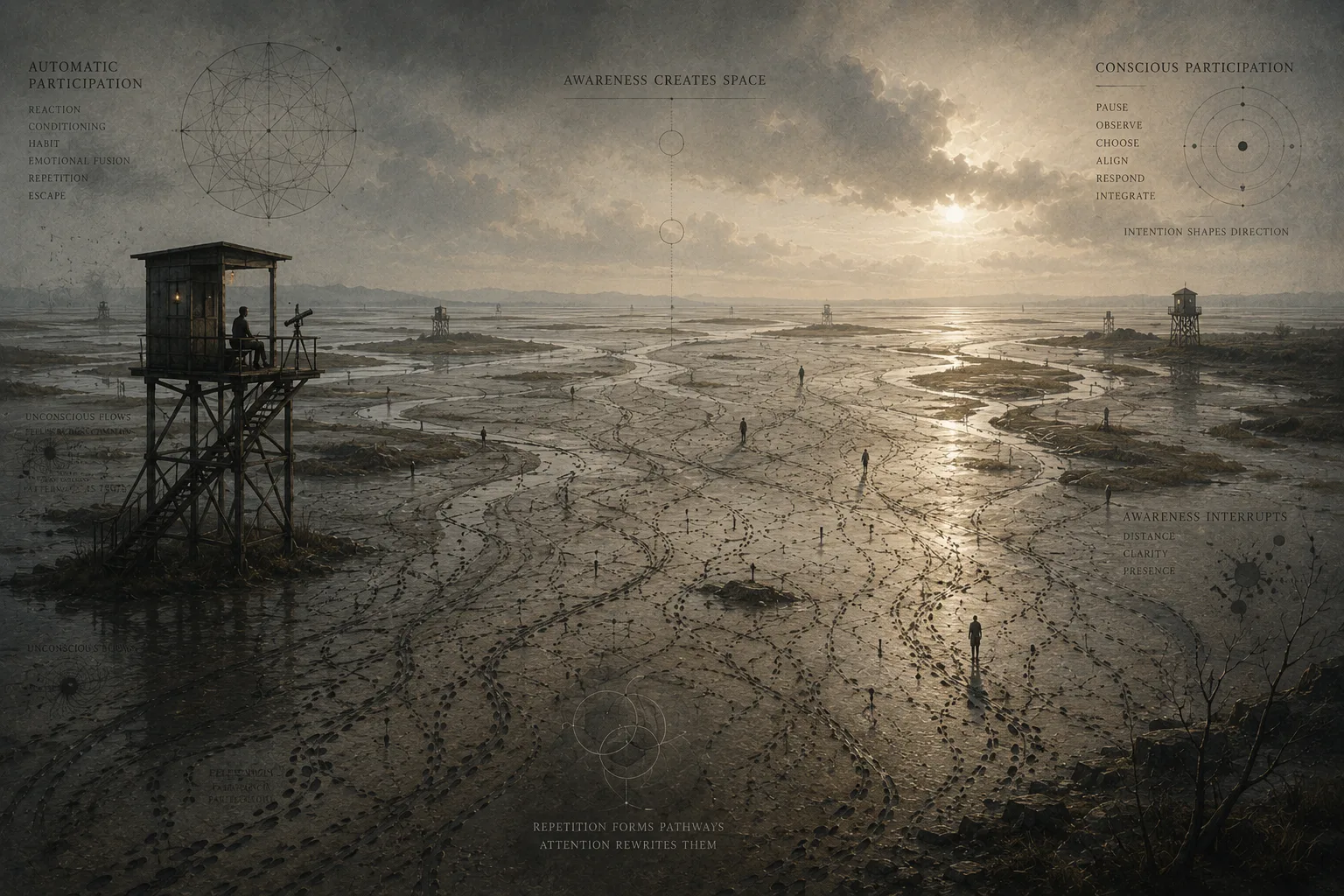
Hope Without Certainty
The piece links uncertainty tolerance, groundedness, and participation to recovery through the difference between hope and attachment to outcomes.
“To live without hope is to cease to live.”
— Fyodor Dostoevsky
I have been thinking about the difference between hope and attachment to outcomes.
For much of my life, hope was closely linked to expectation, certainty, and the need for reality to unfold in a particular way. When reality failed to match what I imagined, I often experienced emotional instability and a sense of disconnection from meaning and direction.
Looking back, I can see how easily hope became organized around control. Part of me believed that hoping for something required reality to conform to a specific outcome, so I could remain emotionally grounded.
But recovery is beginning to show me that hope does not need to become a demand for certainty.
Hope can exist without guarantees. It can orient me toward meaning, direction, growth, and participation without requiring emotional dependence on a particular result.
In that sense, hope begins to feel lighter when it becomes less organized around rigid expectation and more connected to values, openness, participation, and willingness to engage with life as it unfolds.
What feels increasingly important now is recognizing that attachment to outcomes often creates emotional fragility. The more tightly I organize my stability around a specific result, the more vulnerable I become to disappointment, resentment, despair, or disorientation whenever reality unfolds differently than I hoped.
Recovery is beginning to reveal that healthy hope is not passive fantasy or emotional dependency. It is the willingness to continue participating meaningfully even while uncertainty, ambiguity, and lack of control remain present.
That process requires trust because part of me still seeks certainty before fully loosening control. But recovery is beginning to show me that meaning does not disappear simply because outcomes remain uncertain.
For me right now, the work is learning how to carry hope without allowing it to harden into attachment to how reality must unfold.
Because hope does not require certainty in order to exist.
Sometimes hope is simply the willingness to continue participating in life with openness, direction, and meaning, even while uncertainty remains.