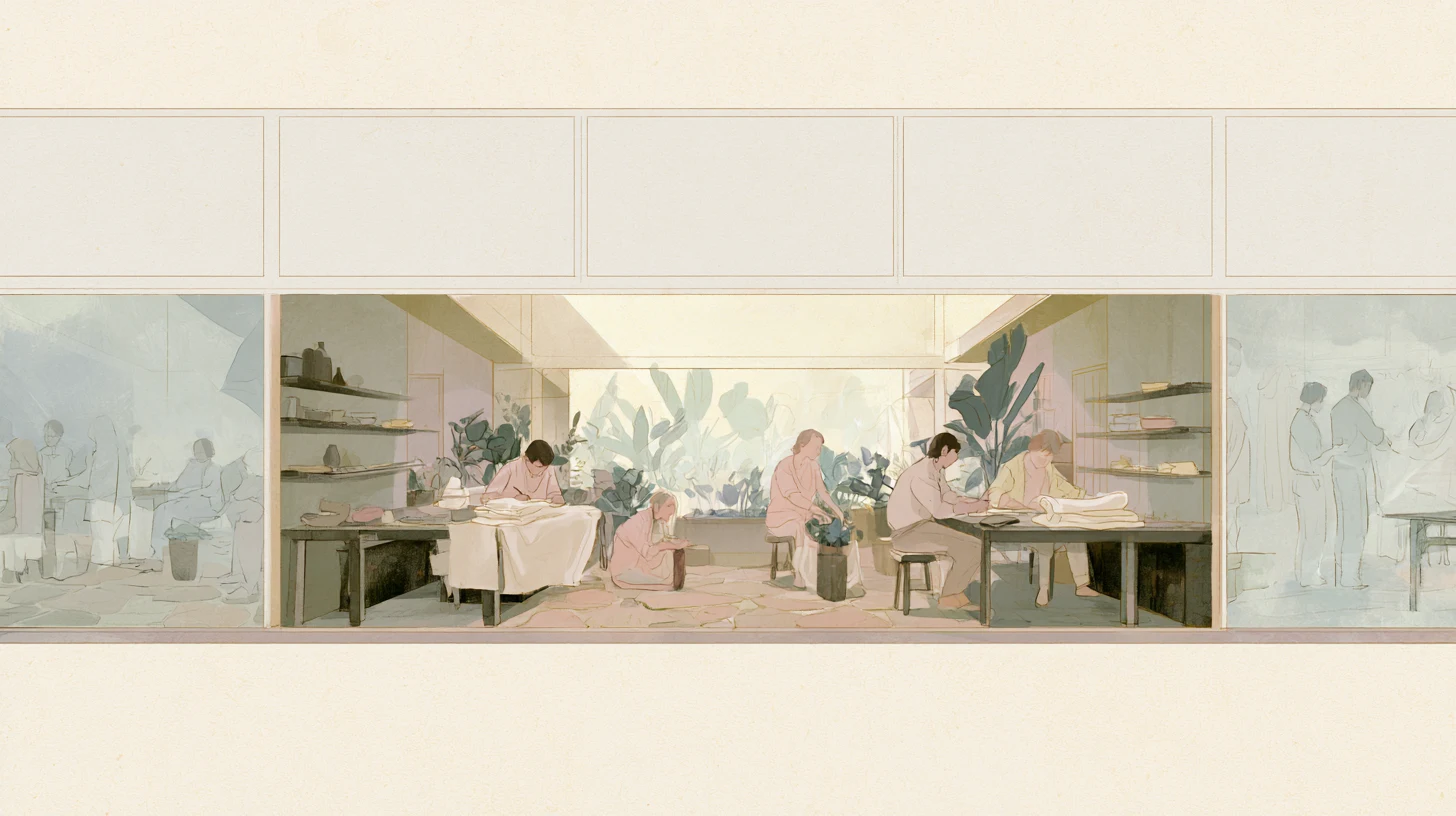
Stability Beyond Control
Stability becomes possible when grounded participation replaces the attempt to control every uncertain external condition.
“When we are no longer able to change a situation, we are challenged to change ourselves.”
— Viktor Frankl
I notice that much of my energy, at one time, was directed toward controlling situations that did not actually belong to me.
Relationships, outcomes, uncertainty, the future, the perceptions of others, and whether events would unfold according to my preferences.
Looking back, I see how often I assumed that emotional stability required a certain level of certainty or reassurance from external circumstances. Part of me believed that if I managed situations correctly, accurately anticipated outcomes, or prevented uncertainty from arising, I would eventually feel settled within myself.
Recovery is beginning to clarify that life does not organize itself around my need for certainty.
There are situations I cannot resolve on demand, outcomes I cannot determine, emotions I cannot entirely prevent, and people I cannot fully control or fully understand. The more I attempt to impose control over what remains uncertain, the more instability and exhaustion tend to follow.
What feels increasingly important now is recognizing that when I cannot alter a situation directly, the question shifts toward how I relate to it internally.
This is not a movement toward passivity or detachment. Recovery is not about withdrawing from life, but about recognizing that stability cannot be built solely on external control.
Even while uncertainty remains, I remain responsible for the quality of my participation, my discipline, my honesty, my awareness, and the direction I continue to choose.
Recovery is beginning to reveal that stability is not constructed through external control, but through learning how to remain grounded while uncertainty persists.
That process requires humility because part of me still seeks reassurance through prediction, control, or emotional certainty. But recovery is beginning to clarify that strength does not mean eliminating uncertainty. Often, it is the capacity to remain aligned with values, structure, honesty, and participation even while uncertainty remains unresolved.
For me right now, the work is learning to notice where I organize my emotional stability around external control and strengthening the internal structure that allows for a steadier and more honest participation in life.
Because growth does not always begin when circumstances change.
Sometimes growth begins when I learn to remain stable enough to face circumstances I cannot immediately change.